The domestic passenger traffic in July 2021 was 51 lakh, ICRA said in a release. Domestic passenger traffic on a year-on-year basis, however, spiked around 131 per cent over August 2020 traffic of 28.3 lakh, it said. The ratings agency said despite the continued recovery in the previous month, there is continued stress on demand, driven largely by the second wave of the pandemic, limiting travel to only necessary travel.

International oil prices retreated from an over seven-year high but was still above $100 a barrel and continue to pose threat to India's inflation rate and current account deficit. While there are no supply concerns as the oil route remained open, consumers will feel the pinch when PSU oil firms start passing on the increase in international rates through a revision in petrol and diesel prices, which have been on a pause for over three-and-a-half-months in view of elections in Uttar Pradesh and four other states. The government is "closely monitoring the situation" and will "take appropriate steps as and when required", a top official said. Brent crude oil surged past $105 per barrel on Thursday for the first time since August 2014, following Russia's invasion of Ukraine.

Boeing 737 MAX planes were globally grounded in March 2019, after two of these crashed within five months, raising safety concerns.

Given its network and fleet, it has garnered the highest share of passenger growth.

The selection gives a boost to the US engine firm, which lost out to rival manufacturer CFM International for IndiGo's 280 aircraft engine order in June.

The economy is gaining traction with gradual pick up in manufacturing activity and moderation in contraction of services, spurred by comfortable liquidity conditions, an RBI article on Tuesday said. Observing that the retreat of the second wave of coronavirus pandemic has been slow, the RBI in an article on the 'State of Economy' said, the aggregate demand conditions are buoyed by the release of pent-up demand post unlock, while the supply situation is improving with the monsoon catching up to its normal levels and sowing activity gaining pace. "Reaffirming the traction that the economy is gaining, the manufacturing activity is gradually turning around, while contraction in services has moderated.

The final hearing in the case at the London magistrate's court to extradite Mallya to India is scheduled later this month.

However, the reduction in ATF prices will provide some cushion to airlines engaged in a protracted price war have lost control over pricing in one the world's most price sensitive domestic markets.

In a much-needed relief to cash-strapped airlines, this is the second straight monthly reduction in rates and the biggest single cut ever.
Air Turbine Fuel cost in India constitutes nearly 40 per cent of the ticket cost against 25 per cent in other countries.

The hike comes on back of two massive hikes effected on February 1 and 16.
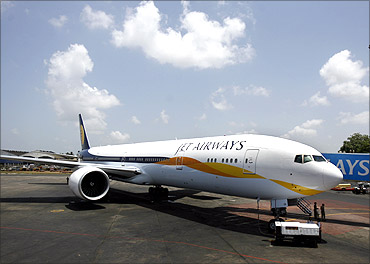
With jet fuel prices hiked by 2.5 per cent, Jet Airways on Friday increased fuel surcharge on its tickets by Rs 200 with effect from tomorrow, raising airfares.

Jet fuel constitutes roughly 40 per cent of the operating cost of an airline.

Mumbai, Bengaluru, and Kochi airports have hiked their landing charges by up to 45 per cent, increasing the operating cost for airlines at a time they are facing financial constraints because of the two months of grounding and weak demand.

They say it will have severe impact on their financial strength
Refuting all the allegations, IOC has clarified that no monopolistic situation exists in supply and pricing of aviation turbine fuel (ATF) to airlines.
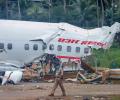
Serving pilots question the Kozhikode plane crash report findings.

Public sector oil companies on Sunday slashed jet fuel or Aviation Turbine Fuel prices by 3.7 per cent, the tenth reduction since September. ATF prices in Delhi were slashed to Rs 29,158 per kilolitre, effective midnight tonight, an official of Indian Oil Corporation, the nation's largest fuel retailer, said. The fuel used by airlines till today was priced at Rs 30,288 per kilolitre. After today's Rs 1,130 a kilolitre reduction, jet fuel is priced at early 2005 levels.

A320neo, the narrow-body, fuel-efficient aircraft from the Airbus stable, is making its debut at the Hyderabad air show.

Indian aviation has deep-rooted problems that need comprehensive and coordinated solutions, and high aviation turbine fuel pricing is certainly the most urgent.
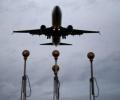
Airlines are now pushing up fares and hopes to improve margins over the next three months to make up for the poor September quarter, even if it leads to a slight fall in their passenger load factor.

Grounding increases govt carrier's fuel cost by Rs 40 lakh daily, forces changes in schedules.

Demand for the earlier variant 737NG planes is also expected to pick up due to the grounding of MAX planes.
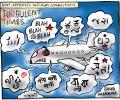
India remained the world's fastest growing domestic aviation market with 51 straight months of doubled-digit traffic growth but the woes of passengers as well as carriers manifested in myriad forms.
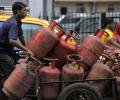
No immediate comment was available from airlines on the impact of the price hike on passenger fares.
Firm crude and weaker rupee mean more losses for oil marketing companies. Jet fuel also set to rise, stressing airline finances.

Vistara will operate from its base Delhi and fly to Mumbai, Bengaluru, Hyderabad, Goa, Chandigarh, Srinagar, Jammu and Patna in the first year as per its plan submitted to DGCA while applying for the AOP.
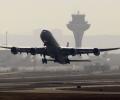
Indian airlines are running into losses.
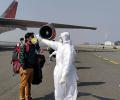
Indian airlines are expected to post a consolidated loss of $4.1 billion this fiscal, similar to what they are estimated to have incurred in 2020-21, taking the total losses of two years to around $8 billion as a result of the pandemic so far, aviation consultancy and research firm CAPA said on Thursday. In a report, CAPA expects domestic passenger traffic to be around 80-95 million in 2021-22 as against 52.5 million in the previous financial year. However, despite this growth, it will be well below than around 140 million passenger volumes recorded in 2019-20, CAPA said in the report. This projection of the traffic volume does not take into account the anticipated third wave of the pandemic, it added.

Unveiling his infrastructure conglomerate's green vision, billionaire Gautam Adani on Tuesday said his group will invest $20 billion over the next 10 years in renewable energy generation and component manufacturing and will produce the world's cheapest green electron. The port-to-energy conglomerate plans to triple its renewable power generation capacity over the next four years, foray into green hydrogen production, power all data centres with renewable energy, turn its ports into net carbon zero by 2025, and plans to spend over 75 per cent of capital expenditure until 2025 in green technologies, he said. Speaking at JP Morgan India Investor Summit, Adani Group chairman said the USD 20 billion investment will be in renewable energy generation, component manufacturing, transmission and distribution.
Two decisions by an empowered group of ministers on Tuesday demonstrated the government's continuing inability to come to grips with the problems being faced by the aviation sector.
Aviation turbine fuel prices in Delhi were slashed by Rs 2,052 per kilolitre to Rs 27,106 per kl, effective midnight on Saturday, an official of Indian Oil Corporation, said. But for the one-off 3.3 per cent increase in rates on January 16, jet fuel prices are declining in tandem with the fall in international oil rates.

These airports are those at Amritsar, Varanasi, Bhubaneswar, Indore, Raipur and Trichy.
From April 1 all domestic airlines except Air India have increased fee for cancellations and date change by Rs 200 to Rs 950.

'It goes without saying that Air India has now no imaginable reason to exist.'
Mumbai-based Pratibha Shipping Company, which owns six tanker vessels, has secured a contract from Mangalore Refinery & Petrochemicals, a subsidiary of ONGC, for transporting fuel to Mauritius for three years.

Jet fuel will cost Rs 37,300 per kl in Mumbai, home to the nation's busiest airport, from Rs 38,246.60. The reduced rates will help cash-strapped airlines cut fuel cost, which constitutes roughly 40 per cent of their operational cost.

Most of them had to wind up operations due to high operating cost, expensive fuel and longer than expected gestation period.

One reason is that airlines have ramped up capacity and expanded their presence in tier-II markets. The first of a three-part series analyses how the aviation industry is an outlier in the midst of an overall economic slowdown.
